Isla Mujeres is a small tropical island off the Yucatan coast of Mexico, very close to Cancun. It is of course not a well-known birding destination, being much more holidaymaker oriented, but it is where we selected for our spring break. For those non-Americans reading this, spring break is the mad dash to the sun that all north Americans who can afford it make after the apparently endless winter.
It is another excellent American tradition, and one I plan to adopt for the duration.
Isla Mujeres is about 7km long, and is made of limestone. The west coast is the sheltered side of the island, and had lots of sandy beaches, shallow water and mangroves. Most of the beach resorts and all of the marinas are on this side, and there are many piers, jetties and pilings that provide perches for the thousands of
Laughing Gulls, Brown Pelicans, cormorants and terns that feed here. Also on the west side is a large lagoon, called
Laguna Makax. This doesn't
have much birdlife on the water itself, but is fringed by mangroves
which were very productive.
The east coast faces out into the Caribbean, and therefore bears the brunt of most of the weather. In consequence it consists of low limestone cliffs, and not many birds. It is the side that will produce passing seabirds though, and it is worth checking regularly.
Inside the island itself there is a surprising amount of good wetland habitat. The two largest bodies of water are
Salina Chica (left) and Salina Grande. Salina Chica is mostly closed off, though a small gap in a chainlink fence at the southwest corner will allow an adventurous birder to gain access to a marvelous spot. Presumably because it is closed off it holds large numbers of waterbirds.
Salina Grande is much larger, and at first glance seems devoid of birds. Both ends of the lake are much nicer though. In the north a small reedbed held a
Least Bittern for a few days. In the south is a fenced off area which can be accessed through a public park. This was a very good area for waders and herons. Best birds here were
Sora Rail, Solitary Sandpiper and
Ringed Kingfisher.
Several species seem to be present everywhere, drawing the attention of even non-birders. On Isla Mujeres these include
Great-tailed Grackle, European Collared Dove, White-winged Dove and
Tropical Mockingbird. With care though, many other species can be found.
 Yucatan endemics:
 Yucatan has a number of endemic species and subspecies, however few of these occur on Isla Mujeres. Those that I found were
Yucatan Vireo, Black Catbird and the Yucatan race of
Hooded Oriole. All three species were seen in the mangroves.
 Seabirds:
 Like most tropical islands of my experience seabird diversity was low. The most obvious birds of any kind are the large numbers of
Magnificent Frigatebirds soaring over the island all day. True masters of the air, they live up to their name. Less numerous, but still obvious to even non-birders are the
Brown Pelicans. Gulls are represented almost exclusively by
Laughing Gull, of which there are hundreds, though I did have one flyby
American Herring Gull. Terns were more interesting. The southwest corner of the island had a fair sized flock of
Sandwich Terns perched on the pilings outside one of the beach resorts (I counted 42 together on one day). There were a few scattered
Royal Terns among them, and on Saturday 28th there was a flock of 8
Roseate Terns, apparently quite a rarity.
 Herons & Ibis:
 The inland lakes of Salina Grande and Salina Chica held a remarkable variety of herons. The most interesting was a male
Least Bittern seen at the north end of Salina Grande on 23rd & 26th. Also present at these two sites were
Great White Egret, Snowy Egret, Great Blue Heron, Little Blue Heron (both blue and white phase birds)
, Tricolored Heron and
Green Heron. The mangroves had both
Black-crowned Night Heron and
Yellow-crowned Night Heron, and three
Cattle Egrets were at various sites in the south on 28th.
White Ibis were in small numbers at the wetlands on each visit, with a single bird feeding on the lawn of a beach lodge in the south on 28th.
 Other waterbirds: American Coot
 and
Blue-winged Teal were numerous and
Common Moorhen was
present in small numbers at both inland wetland sites. Best of all was a
Sora Rail at Salina
Grande on 23rd, though a
Lesser Scaup at Salina Chica on 23rd & 24th was also nice. Flocks of
Blue-winged Teal were visible offshore moving north on 28th and 29th. A few waders were present at all sites. The most numerous were the
Black-necked Stilts at both the wetlands, and in the mangroves. Around the coast small groups of
Ruddy Turnstone were quite common. A group of 3
Semi-palmated Plover were with them on 23rd. Salina Grande had the greatest variety, with a flock of up to 18
Least Sandpipers present all week. Also at that site were up to 10
Short-billed Dowitcher, a single
Spotted Sandpiper, and best of all a
Solitary Sandpiper 23rd to 27th.
Neotropic Cormorants are on the wetlands, with
Double-crested Cormorants mainly present in the marine areas.
Ringed Kingfisher were present at both Salina Chica and Salina Grande.
Raptors: Poorly represented. The only birds I saw were singles of
Turkey Vulture over Cancun on 21st, up to 3
Osprey around the mangroves (including one bird collecting nesting material), and a migrant
Peregrine resting on the cell-phone tower at the north end of the island.
Doves & Cuckoos: One of the nicest surprises of the week was finding
Mangrove Cuckoo on 4 different occasions. The common doves were
European Collared Dove and
White-winged Dove. Ruddy Ground Doves were also fairly easy to find, though I only found
Mourning Doves once.
 Flycatchers:
 An interesting collection of tropical flycatchers was scattered around the island, in all habitats. Most obvious in the early part of the week were the
Tropical Kingbirds, they seemed to be all gone by about the 27th though, to be replaced almost immediately by
Eastern Kingbirds on 28th. Two pairs of
Great Kiskadee were also seen, one of which appeared to be nest-building on a transformer near the north end of Salina Chica. A
Brown-crested Flycatcher on 27th turned into 2 on the 28th. A tricky identification challenge made somewhat easier when it responded to a recording of its call within seconds.
 Vireos & Wood Warblers:
 The commonest small passerine on the island was
Palm Warbler, which seemed to be present in every patch of scrub. Also common were
Yellow Warbler. Warbler numbers built up during the week, reaching a peak on 27th. A total of 14 migrant wood warblers were seen, including;
Worm-eating Warbler, Northern Waterthrush, Black-and-white Warbler, Prothonotary Warbler, Common Yellowthroat, Hooded Warbler, American Redstart, Cape May Warbler, Northern Parula, Magnolia Warbler, Yellow Warbler, Palm Warbler, Yellow-throated Warbler and
Prairie Warbler. In addition several of the distinctive
Mangrove Yellow Warblers were also seen.
Mangrove Vireos were very common in the right habitat.
Other birds: Great-tailed Grackle are ubiquitous on the island, being found basically everywhere.
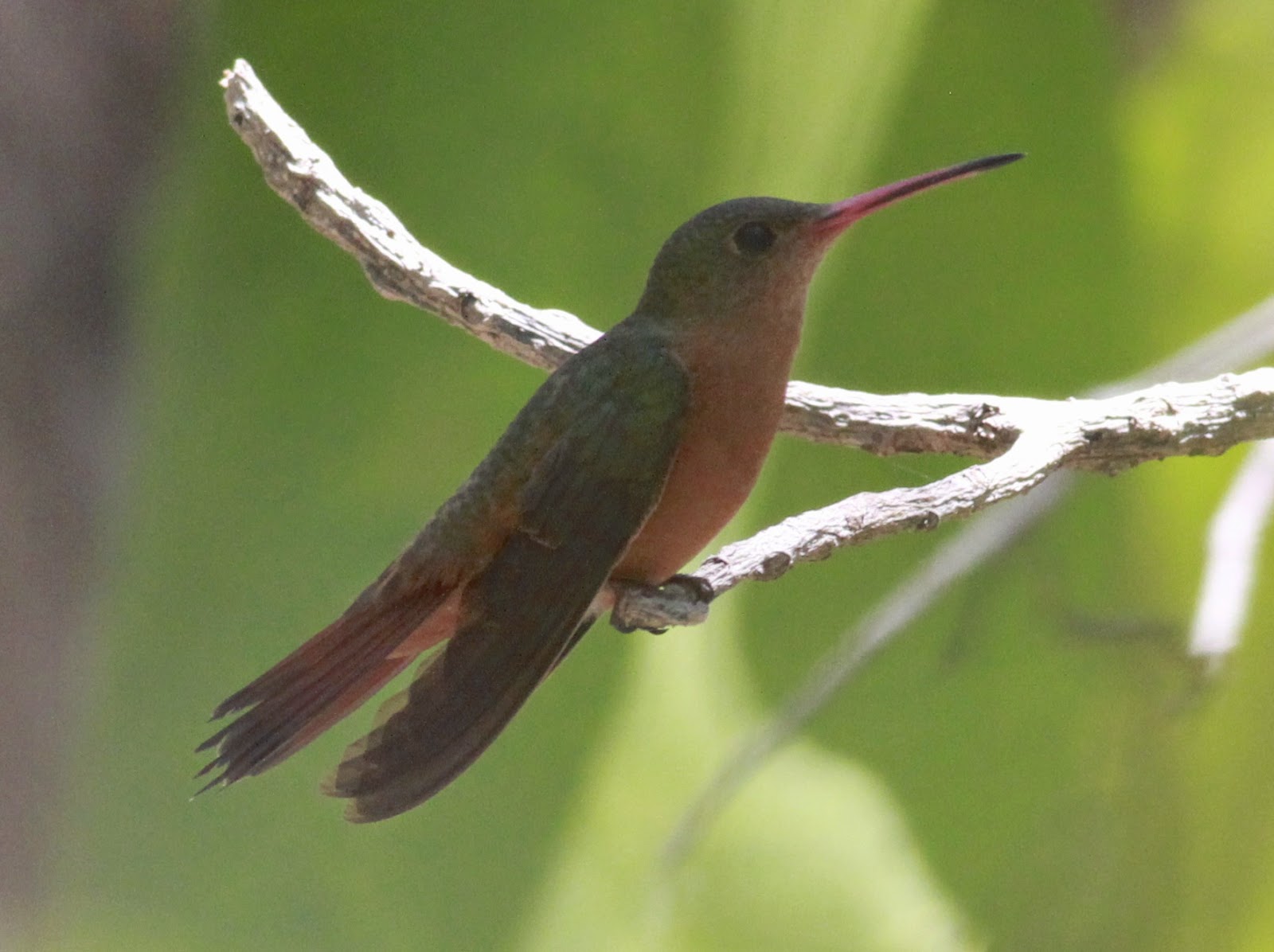
Bronzed Cowbird were faithful to one site in the south. The only hummingbird found was
Cinnamon Hummingbird, which was in very small numbers at just about every site.
Tropical Mockingbird are also widespread and common. On 27th the fall of migrants included both
Orchard Oriole, and the Yucatan race of
Hooded Oriole.
Barn Swallows were present in small numbers on most days, and a small group of
Northern Roughwing Swallows were in the mangroves on every visit.
Grey Catbird are common in the mangroves.